Showing posts with label Abolition. Show all posts

Wednesday, 14 July 2010

A Guide to Veganism

When speaking to others about Veganism I often hear, 'I could go Vegetarian but couldn't manage Vegan!' Usually for reasons such as not being able to 'live without cheese' and the likes. The truth is, Vegetarianism does not stop the use of nonhuman animals and use is the problem. We will never be able to abolish the exploitation of other beings whilst we continue to consume animal products in any way shape or form. Vegetarianism still creates suffering and death on other animals, you are just choosing who you want to continue to harm and how you will continue to harm them (by taking their secretions instead of their flesh).
In many ways, if you increase you dairy intake when being vegetarian, you will not be reducing the death and suffering of animals at all and may be actually increasing the role you have in creating the demand for death and suffering to occur. Vegetarianism falsely 'clears' our conscience, as we think we are helping when in fact, we are still continuing to create demand for the use of others. It will never help to work towards the strive for abolishing the explotation of nonhuman animals.
We use other animals because we like the taste, feel and look of the products we can force them to produce - There is nothing morally justifiable about this whatsoever.
If you want to stop the use and unnecessary harm we inflict upon these beings then you must become Vegan.

And I'm going to help you!


Becoming Vegan:

You may feel like gradual steps to Veganism work best for you, changing one thing at a time (If this is so, make sure, however,  not to let the gradual changes drag for too long. There is an element of 'just getting on with it' involved). Start off by changing your main meals, followed by all the snacks and drinks you have, then clothes/shoes, any make-up you may use, household cleaning products and so on. Eventually all the animal products you used will have been switched with Vegan ones.
You may feel that it will work better just to change everything straightaway. If this is the case, gather all the research you need and go for it!

It is best to make sure the products you buy are stated to be Vegan or approved by the Vegan Society (or equivalent). Products like these can be bought via online Vegan stores as well as major supermarkets and health stores. It is still important to check the ingredients and manufacturing information on products as mistakes can be made and some products may be stated Vegan even when produced in factories on lines handling dairy and eggs (these products are not Vegan as the lines are not cleaned often enough).

Get a list put together of all animal products. This can become rather extensive but it is important, particularly if you decide to look into buying products that could be Vegan but do not have any statement or approval. When I went Vegan I made a similar sort of list and found it very helpful when looking about. It also helped to inform me of what the ingredients actually were. Even since then (2007), options have become so widely available within many major supermarkets and more Vegan shops are popping up.

Clothes - It is pretty easy to shop in the high street shops still if you wish to. Just make sure there are no animal products used to make the clothing, such as wool, mohair, silk, leather (check the labels). Synthetic shoes from high street stores will most likely be held together using a glue containing animal ingredients, therefore Vegan stores will be the way to go here. There are numerous online Vegan shoe stores as well as some you can visit (Please see my links).

Residential Trips - These are something I have experienced numerous times! State that you are Vegan and they will cater. Often eating the basics is a safe and healthy option too - potato, vegetables, fruit and salad. Taking some raw fruit and nut bars along with you comes in very handy too (TREK & NAK'D bars here in the UK are good).

Eating Out - Go to places with Vegan options, or better still, all Vegan places! A meal in is often just as nice if not nicer too! Get some Vegan cook books and make a nice meal.


Vegan Recipe Books: (Just a few cookery book suggestions)

'Animal Free Shopper', 8th Edition, The Vegan Society
'Another Dinner Is Possible', Mike & Isy
'A Vegan Taste of Greece', Linda Majslik
'Vegan Cooking for One', Leah Leneman

Supermarkets Supplying Good Vegan Products: (UK)

Waitrose
Co-operative
Sainsbury's

Please see my links section, which has some good stores listed.


You learn as you go and you will gradually become more confident. Always keep in mind why you are doing it and who you are doing it for. If you are ever questioned, be confident about it and do not feel like you should keep it quiet. If you, like many, know that nonhuman animals should be given equal consideration and that they should not be, under law or in any other way, classed as 'things' but instead as persons, then go Vegan and tell others why you are Vegan - You may just help them make the shift.

As long as you aim to become Vegan, do it and remain consistent throughout your life, then you have done what needs to be done in order to work towards the abolition of all animal exploitation.


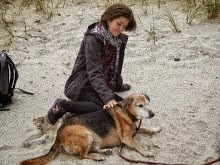
Photograph supplied by Benny

[If you are working on becoming Vegan and would like to talk, please do not hesitate to email me - my email can be found in my profile to the left].

Monday, 28 June 2010

Making a Tourist Attraction from Her Suffering & the Death of Her Calves - Isle of Mull, 'Cheese Farm':


Video of the cows being used at 'Cheese Farm' - http://www.youtube.com/watch?v=nI9ImCxl0Ko
Please take the time to watch.


The cows on 'Cheese Farm' on the Isle of Mull, Scotland spend their days the same as any other dairy cow - kept on a continous cycle of pregnancy throughout their lives as a dairy cow, having their calves taken from them so that we can use the milk meant for their calves, being milked up to three times a day. This does not include the further death and suffering when considering the calves. The calves will either be reared to do the same as their mother or, if male, will be killed (as they are not 'suitable' for meat production) or sent to veal farms not long after birth. You can actually visit 'Cheese Farm' to purchase some local 'Isle of Mull Cheese' and sit in the tearoom to enjoy a milky cup of tea or coffee.

This all paints a pretty picture, to omnivores and vegetarians, of lush pastures with happy cows roaming around, more than happy to let us take their milk. It covers up the truth - the suffering and death caused just to produce the cheese and the milk in those teas and coffees. Just because an animal product is local, organic and the animal being used has stretch upon stretch of lush green fields to wander in a setting as beautiful as the Isle of Mull, does certainly not mean the animals live a life absent of the intentional harm caused by us, humans. To state that consuming animal products that are organic, free range and local is a morally good thing to do is wrong and incredibly misleading. This makes those of us who are unaware of the facts think that we are doing a good thing for the animals when the contrary is actually the truth. We are merely helping to support the use of nonhuman animals. The cows are still being used by us for our unnecessary desires.

On 'Cheese Farm', the cows had white numbers on the top of their thighs. They had yellow tags in their ears and what appeared to be leather collars round their necks. They have been labelled, numbered and tagged just like the products on our store shelves. Why are they less important than ourselves? Differences in cognitive abilities should not in any way lead to someone being used as a slave. The majority of us will agree with that on a human level and the only thing stopping us from agreeing with it on a nonhuman level is our Speciesism. Where is their inherent value? They should not be resources.

They have sentience. They feel the effects of what we inflict upon them and when I was walking past 'Cheese Farm' I could see the effects - Sore udders, weak hips and sad eyes as we deprive them of strength through physical harm and the property status we put upon them. As we take their children from them each and every time. We need the time to come where 'Cheese Farm' and all other locations of animal agriculture no longer exist. Let it be replaced with arable agriculture and let the existing nonhumans find sanctuary while they live out their days as they wish. Let us stop bringing lives into the world who are only ever to be used as slaves - This is immoral.

Go Vegan - It's the least we can do and it will end their slavery.

Friday, 11 June 2010

Animal Industry Facts: A brief insight into the lives of the animals rose for our own benefits, to create unnecessary products for our own consumption

Poultry – Whether the birds are battery or cage free they are subjected to debeaking. As the result of confined spaces many become crippled and suffer from heart and lung failure. This all leads to their slaughter, 40-42 days later. In natural conditions a chicken can live up until the ages of 7-12 years.

Eggs – Even free-range eggs come from birds kept in groups of up to 16,000 per shed. They can also still legally be debeaked. When a hen starts to produce fewer eggs she loses her ‘value’ and is sent to slaughter in order to fill pies and the likes. All egg consumption contributes to the murder of any male chick born by an egg-laying bred hen as their meat does not meet certain standards. They are killed immediately through gassing, neck dislocation or shredding devices.

Dairy – A glass of milk is no more morally defensible than a plate of steak. Cows are kept within a cycle of pregnancy throughout their lives in order to produce milk. They can be milked up to 3 times per day by machines the majority of the time. Due to the stress caused throughout this process she will have decreased fertility levels within a few years and will therefore be replaced and used as low graded meat. The Male calves born during this cycle required to produce milk for our own pleasure, are of an 'incorrect' breed to be used for meat and are therefore either slaughtered or sent to veal farms.

Pigs – Piglets are naturally weaned at ~4-5 months but in the pig industry can be removed in up to 4 weeks. They will then experience trauma in the forms of tail docking, teeth clipping and castration for the males. After ~six weeks they go to ‘fattening pens’ and the majority are slaughtered at the age of 6 months. Naturally, pigs can live to the ages of 15-20 years.

Fish – In the fish-farming industry, fish can be starved for two weeks before they go to slaughter to avoid contaminated flesh when being gutted, which will affect flesh quality when being consumed. Methods of slaughter include: clubbing, CO2 filled stunning tanks and air or ice suffocation. These all subject the fish to prolonged suffering and result in unnecessary death.

Honey – To produce honey, beeswax and other products produced by bees, the queen is artificially inseminated by the sperm of decapitated bees on a routinely basis. After 2 years, when her egg-laying capability decreases, she is replaced. During this process, her wings are clipped so that the hive remains in a set location. To save feeding bees during the winter, colonies are often killed. Farming bees adds to the pressures that wild bees face along with other pollinating insects.

(The Vegan Society 2008)

Our use of animals does not end here. Additionally, we continue to use wool, silk, shellac, leather, cochineal, fur and consume other animal fleshes and secretions. They are all forms of exploitation.


For further information on the above as well as other animals we use for animal products, please visit www.vegansociety.com or purchase the ‘Animal Free Shopper, 8th Edition’ by The Vegan Society. Or both!

For up-to-date statistics on monthly/yearly animal slaughter numbers in the UK, please visit http://www.defra.gov.uk/evidence/statistics/foodfarm/index.htm


Reference:


The Vegan Society (2008) Animal Free Shopper. 8th edition. The Vegan Society, Birmingham, UK

Let Us Abolish All Animal Exploitation - Because We Can.

The majority of human persons will admit that it is immoral to inflict unnecessary suffering on any animal (human or non-human) - Yet we take part in this unnecessary suffering each and every single day, when we buy that dairy, when we buy that flesh, when we buy those eggs. When we look in the mirror to put our make-up on and when we put those new boots on we purchased the other day. Our demand for animal products ensures that the exploitation and death of non-human animals continues.

What can we do?

Go Vegan. It's that simple.

We need to help one another towards Veganism and continue to educate more and more each and every day. We need to give homes to those who need homes and we need to remain consistence within Veganism in order to make it clear that no animal use at all is morally defensible.

Regulating animal use will only ever make people feel comfortable with continuing consuming animal products. We need to set the bar at the aim - To abolish animal use through changing our attitudes towards non-human animals, by seeing them as persons and not things.

If we are to practice what the majority of us agree with and stop what we know is so wrong, we must become Vegan and remain Vegan for life. This is the only way that the abolition of animal use will ever come about. It may take time but one by one the demand for animal products will decrease.

Veganism is our obligation to the more vunerable persons amongst us. We can change for them...Please trust me and all the others who say this - It isn't too difficult.

Thursday, 10 June 2010

Welcome!

Hi There,

This blog will provide information on veganism and the abolition of animal exploitation through the use of notes on things I see when out and about as well as links and blogs that provide more in-depth information.

It will almost be like a guide to becoming vegan, which will include tips on where to start, recipe ideas and a store list that will fulfil your vegan needs :)

I hope someone, if not many will find this helpful in becoming vegan and staying vegan - for life.

Take care!